Blog

  • Netrunner Never Died

    Netrunner Never Died

    Netrunner is one of the best games of all time.

    It has also been — at least, by official tally — “dead” for six years now.

    What is Netrunner anyway?

    Netrunner is an asymmetric card game for two players, with each playing vastly different games that somehow still mesh together beautifully. Since its inception, Netrunner has had a cyberpunk theme; true to form, this means players take on one of two roles:

    • Corporation: As a megacorporation from one of four powerful factions, the player must defend and advance agendas to score enough points to win the game.
    • Runner: As an intrepid hacker from one of three factions, the player must break through the Corporation’s defences and steal enough agendas to win the game.

    What sets the game apart is the degree and elegance with which this theme gets baked into the actual mechanics. Corporations play their cards face-down, creating a board of imperfect information to reflect the difference between what the Corp and the Runner knows. Runners can try breaking into everything — not just what the Corp might place on the board, but the Corp’s hand of cards, their deck, and their discard pile too.

    The objectives and tools available to each side are vastly different — and yet, the nature of the game forces these into a constant give-and-take (tempo, in the game parlance) as each side tries to force the other into tough choices and eke out a window to win.

    The life and death of Netrunner

    The game was designed by Richard Garfield, the same guy who created that card-game juggernaut, Magic: The Gathering. Originally conceived in the 80s, at the dawn of the collectible card game (CCGs) craze, Netrunner was one of those titles that catered to the stragglers outside of the fantasy-themed games that took most of the spotlight. In terms of game design, it was very much a product of its time — layered on top of its elegant core mechanics were the usual trappings of CCGs at the time, from randomised booster packs to draft formats and card speculation.

    In 2012, Fantasy Flight Games (FFG) licenced the game from Wizards of the Coast (WotC) and re-engineered it as a Living Card Game (LCG). This format ditched the “collectible” aspect of the original game in favour of a standardised starter (“core”) set that could be played on its own, as well as monthly expansion packs with fixed contents to build up the card pool. This meant that players all had access to essentially the same pool of cards for deckbuilding (especially for competitive play), shifting much of the emphasis away from players’ ability to buy up rare and powerful cards.

    Fantasy Flight Games also wrapped the whole Netrunner game in its own Android setting, basically skinning it in its own IP.

    This is important to note, because this split between who owns the setting IP (FFG) and the mechanics IP (WotC) is probably (1) a key aspect of the licencing troubles that resulted in the abrupt discontinuation of the game in 2018; and (2) a major roadblock to any games company officially reviving the game in its modern format following said discontinuation.

    Enter the fan community

    When FFG pulled the plug on Netrunner in 2018, I thought that was it for the game.

    After some time, rumours started surfacing in the old forums — the game wasn’t completely buried. When I first heard about it, I thought it just meant a small corner of the old community was stubbornly holding on — organising a few tournaments online, checking in on each other occasionally, stuff like that. I was surprised and delighted to find that I couldn’t have been more wrong.

    It turns out, in the spirit of scrappy runners everywhere, a few passionate fans banded together to set up a whole registered nonprofit organisation and continue the game in an unofficial capacity.

    Null Signal Games is a full-on game publishing company, operating as a nonprofit, that has produced new sets of Netrunner cards and hammered out an organised play system that encompasses everything from game night kits to World Championships. The new cards are published and distributed across North America and Europe; they are also fully interoperable with the old Android: Netrunner kits. More importantly, though, the Null Signal team has put in a lot of work to build a card pool that goes beyond supplementing the old game, working as a thoughtfully designed ecosystem all its own.

    Beyond the game itself, there are whole departments covering all the roles necessary to sustain a vibrant, growing community: from game design to distribution to marketing to diversity and inclusion. This has been a revival not just of the product, but of the rich and rewarding community experience that had sprung up around it.

    That shines through in what might be the most staggering fact about the whole endeavour, which is that it’s entirely volunteer-run. Every person involved is ostensibly an unpaid volunteer, putting in quite a lot of thought and effort out of sheer love for the game. Look, every single card that has been produced in the Null Signal era is available as a tournament-legal print-and-play, meaning people can get into the game without spending a single cent, and still have access to even the highest levels of tournament play.

    The main goal here, clearly, is to keep a well-designed game alive in every sense of the word and bring it to as many people as possible.

    Again: Netrunner is one of the best games of all time, and the brilliant mechanics aren’t even the biggest reason why. I feel compelled to talk about this here if only to have a record of what fan communities can create, even when “official” parties like established game publishers abandon a game.

  • Grief (1)

    Grief (1)

    1.

    The Emperor of All Maladies by Siddhartha Mukherjee.

    I first started reading it after I’d transferred out of biology, funnily enough. It helped pass the time while I camped out with my parents or my uncle in my grandfather’s hospital room.

    By then, we already possessed an unwilling familiarity with the basic vocabulary of cancer: the different stages and what it meant for my grandfather’s illness to be at Stage 3; the different grades and what it meant for my grandfather’s tumors to be classified “high-grade”; the different treatments available and what they meant for my grandfather’s chances and quality of life.

    The book helped add context. I suspected, at the time, that reading was a desperate attempt to sustain an illusion of control: understanding more of the mechanisms and history of the disease would be my small part in helping my grandfather confront it.

    In retrospect, it feels more like an oblique approach towards acceptance. None of us actually wanted to articulate the enormity of the disease, because that was tantamount to admitting how paltry our options were.

    So, for the longest time, I let the book do that for me, under the guise of expanding my ability to navigate the situation. It was a clear, cogent map of cancer: the slow evolution of science’s understanding of it; the lulls and wrong turns and significant leaps forward in terms of treatment; and how, ultimately, all of this still fell short of any definitive cure.


    There’s a quote that’s become attached to my memories of this book:

    “The best thing for being sad … is to learn something. That’s the only thing that never fails.”

    T.H. White, “The Once and Future King”

    2.

    One of my aunts — my godmother — died last year.

    She was my mother’s cousin, one of the daughters of my grandmother’s favourite sister. She was at my grandmother’s house at least once a week, sneaking us Maltesers and See’s Candies, spiriting us off to their house in Batangas to go swimming on the weekends. She had the same travel bug as the rest of that side of the family, jetting off to a new country every year and bringing back suitcases of pasalubong each time. Every Christmas, there would be a pile of gifts by the tree, all tagged with cards written in her firm script.

    The week before my mom’s birthday, I got a message from her saying that my godmother had been hospitalised. Metastases in her intestines; none of us even knew she was sick. She was scheduled for surgery the next day.

    After the surgery, her doctors said, once she had recovered her strength, she would need to undergo chemotherapy.

    After the surgery, she had a stroke. After the stroke, she caught pneumonia. After that, the week of my mom’s birthday, the family gathered for her funeral. They sent me updates on WhatsApp.

    This Christmas, there was more space around the tree because we no longer had half of the gifts that would usually be there. Everyone still tiptoed around it anyway.

    What did I learn between one loss to cancer and the next? Nothing that helps make anything easier, to be honest.


    There have been more in the years between, of course. Different diagnoses, different stages and grades. I can’t recount them all.


    I started re-reading the book again last year, and finished it again just last week, during the first weekend of the new year.

    In the book’s last chapter, when Mukherjee charts the latest efforts to advance targeted cancer therapies by sequencing the disease’s genome, he emphasises the gulf between understanding and treatment: Identifying particular biological mechanisms and pathways that drive the disease is one thing, but translating that knowledge into therapeutic strategies is another challenge altogether.

    More so because each cancer genome, as genetic research has now validated, is unique. Or, as Mukherjee put it, in what probably wasn’t a jab for me in particular but felt like one anyway, “Normal cells are identically normal; malignant cells become unhappily malignant in unique ways.”

    This heterogeneity is part of what makes the disease so intractable. Funny how, emotionally speaking, it’s the apparent homogeneity of outcomes that makes cancer so daunting.


    3.

    One of our friends had been uncharacteristically silent online for weeks. We were all in different countries. The fastest way anyone had to physically check up on him was to book a 1.5 hour flight and cab over to his apartment.

    We had, instead, tried various messaging and social media platforms, but received no response. For a while we thought he was just on some kind of digital “detox,” as some people in our friend group have done from time to time.

    When we eventually got hold of one of his friends who lived in the same country, we found out that he had been in the ICU, in a coma, for over a month. There had been some kind of issue with his brain; he was awake now, but had some speech and vision problems — the details remained hazy.

    He is awake, but slow to recovery, came one of the first few updates. The family will move him to another hospital once he is doing better.

    He’ll get discharged tomorrow, was the next update. He can see better now, but still has some speech delay.

    Do they finally know what the diagnosis is? one of my friends, based in the Netherlands and evidently staying up for news, replied.

    There’s inflammation on his brain, but his mother didn’t get what kind of virus. The doctor isn’t here so I can’t ask the details.

    No problem, our friend replied. As long as it’s not tumour/terminal stuff, I’m a lot relieved. Guess we all are.

    Then, towards the end of November:

    He seems to be healthy enough to use social media again!

    Yes, I can call and talk to him last Saturday.

    Good!


    He reacted to one of my IG stories earlier this week. A heart emoji on a story of me and another mutual friend having ice cream — his favourite food.

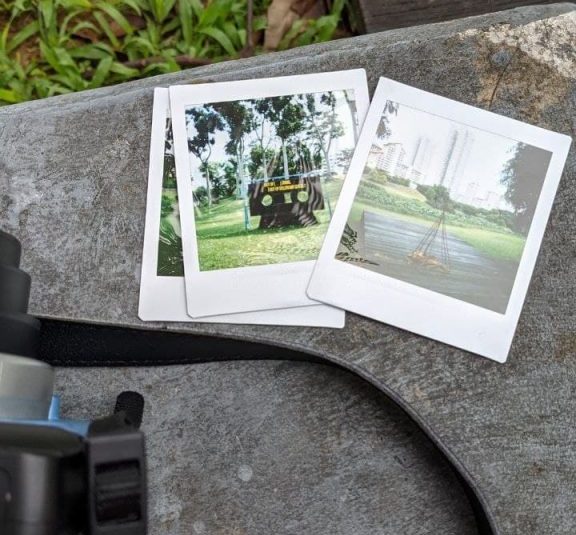
    He always has a freezer full of ice cream at home. Famously exercise-averse, he will walk countless city blocks for a good ice cream shop recommendation. One of our mutual friends’ favourite stories is how they spent evenings eating ice cream at various convenience stores in Taipei, in the middle of winter, with him dressed only in shorts and one of his signature hoodies. They were together on a work trip then, visiting other colleagues who had also become friends. When this mutual friend and I visited other such colleagues-turned-friends during one cold spring, we sent him a postcard bought from the ice cream shop in Edinburgh, an Instax from the gelato shop in Amsterdam. We had gelato together when he visited Singapore, a few months before he went radio silent.

    The last time he had reacted to one of my stories was a month before everyone stopped hearing from him, on a photo of me and our mutual friend going pottery painting.

    A heart emoji and: That’s a cute cat!!!

    Thank youuu, I’d replied. Come over again soon so we can make more cat plates together haha


    And now, to his latest heart emoji: HOW ARE YOUUUUU

    I hadn’t expected him to reply. Our mutual friend and I kept talking about our holidays, catching up on how our year had started. When I got the notification that he’d sent a message, we excitedly went to check.

    I just got better, he’d typed back. Ever the optimist.

    I had 5 tumors the past months

    In the brain

    Doctor said it’s Stage 4

    To our question about whether it would be okay to visit, he answered, Maybe once I’m back in Jakarta. Ever the optimist.


    Why do bad things happen to good people? It’s a cliche question, but when you’re in shock, I suppose, nobody has the energy or inclination to be original.

    Another one, this time from our friend in the Netherlands, on a call past midnight our time, as we figured out what to do: Why is growing up so hard?

    I had turned off my Kindle that was still on the last page of the book I’d just finished, the tail end of the index:

    X-rays, 23, 24

    – as carcinogen, 77-78, 347, 349, 389

    – as diagnostic tool, 291; see also mammography

    We were trying to write an index of our own this time, halting, uncertain. What we could do; what we knew and didn’t know for sure about our friend’s condition; what we knew and didn’t know about what he would want, in a situation like this.

    The key conclusion, of course, was that we couldn’t just try to take action for the sake of feeling better about doing something. We had to support in whatever ways (a) were feasible and (b) would actually be helpful and welcome, and wouldn’t stress him out further.

    The reality, of course, was that this made for a dismal Venn diagram.

    “There’s not much we can do right now,” our friend in the Netherlands summed up. “And we are running out of time.”


    There’s a quote from the book itself that has stuck with me on every reading. It encapsulates that gulf between understanding and practice, at least for me:

    “What is certain, however, is that even the knowledge of cancer’s biology is unlikely to eradicate cancer fully from our lives … [W]e might as well focus on prolonging life rather than eliminating death. This War on Cancer may best be “won” by redefining victory.”

    I understand this. The past twelve years have been an education, protracted and difficult, on this.

    But, in practice: How do you wait for the clock to run out on someone you love and call that victory?

  • Coda

    Coda

    This entry is part 7 of 9 in the series Annual Soundtracks

    2023 felt like the longest year.

    Or, more accurately, it felt like speedrunning through several decades in one go. Loath as I am to reference Taylor Swift, of all people, it’s a little fitting that one of the prevailing pop culture moments of the year stands on the concept of eras. Specifically, what sticks out to me is this mental image of eras as a patchwork: each a discrete period not necessarily conceived in direct connection with the others, but threaded together anyway by a common denominator.

    In the case of the past year’s various eras, that would be, well, the person living through them. Though at various points, “living” might have been too strong a word, haha.

    Each quarter of 2023 felt like a different life.

    The version of me that suffered through March is not the same one that hurtled through August. Pick a month, any month; I could say the same about every other month of the year, really.

    That’s obvious in this year’s playlist too. It’s more of a bricolage than any of the playlists that came before, swinging in wider and wilder arcs from mood to mood, genre to genre. These annual soundtracks have always been impressionistic, but on subsequent listens, previous iterations always felt held together by a prevailing theme — something that haunted or hounded me throughout the year, for better or worse.

    I guess there were too many ghosts this time, real and imagined.


    In many ways, 2023 was the year of living through worst-case scenarios.

    In hindsight, this sounds a bit dramatic to say about the same year that saw actual worst-case scenarios happen on a global scale, be it in geopolitics, public health, the environment, or any other vector of devastation imaginable, really. But I suppose it’s human to get lost in one’s personal pain for a while, especially when that pain is at its most acute.

    This was the year of unexpectedly ugly-crying to a friend over the phone on some random weekday; of dissecting any and every record available to try and identify how exactly something that felt indispensable fell apart; of cycling through guilt, resentment, anger, grief, regret, all against the backdrop of an unshakeable sadness; of powering through sleepless nights and short fuses to deliver near-impossible asks; of feeling further and further removed from whatever semblance of home I ever felt like I could go back to.

    It was also the year of learning, through the relentlessness of the day-to-day, that many of the things that terrified me could happen and life would go on regardless.

    Funny how that works, right? The universe can punch you straight in the gut, your reserves can be depleted twice over, but nothing about that will move a project deadline or a dear friend’s wedding date.

    So you keep going.

    Sometimes there’s nothing for it but to look the day dead in the eye, pick out what is absolutely non-negotiable about it, and focus your energies on getting through that — quite like how our bodies, overwhelmed by cold, will dial down peripheral blood flow to ensure the little warmth available keeps flowing to our core organs.

    It wasn’t so much surrender or resignation as a dogged gathering and re-gathering of whatever pieces of my life still felt solid and manageable. And an acceptance, I suppose — easier and more unsentimental each time — of how much or how little each attempt gave me to work with.

    It helped, of course, that this was the year where I put active, continuous effort into identifying, drawing, and enforcing boundaries. Maybe this is my Aquarius moon speaking, but having clearer boundaries helped me make peace with what I wanted or didn’t want, could or couldn’t control, would or wouldn’t get. In aggregate, I guess that constitutes a kind of peace with who you happen to be at any given time, too.


    Here’s what really surprised me about 2023 though: it wasn’t all just soldiering on. The relentlessness of life, it turns out, can be gentle too.

    Funny how that works, right? The universe can punch you straight in the gut, your reserves can be depleted twice over, and flowers will still bloom. Life can bring you hot tea, a walk in a park, a surprise birthday visit — comfort, calm, and even happiness, whether or not you feel equipped to encounter them.

    What is there at the end of it all?

    It turns out “common denominator,” in its most mathematical sense, is a surprisingly apt turn of phrase for the throughline that ultimately threads these eras together, no matter how unrecognizable some versions might have become.

  • Flora Singapura: New finds in GBB

    Flora Singapura: New finds in GBB

    Plants have always been an important part of a good day for me. When I run into plants, that means I’m wandering around outside; and when I’m wandering around outside, that means I’m discovering bits and pieces of the world rather than getting stuck in my own head.

    My aunt over here loves taking walks, and I look forward to accompanying her whenever possible. We marvel over flowers, look out for monitor lizards, try to capture snapshots of the most colourful migratory birds passing overhead. There are some constants in our weekend options: the Botanical Gardens, MacRitchie Reservoir, Gardens by the Bay.

    Today we were at the Gardens, and we ran into a fruit that we hadn’t seen before, even in two years of frequent visits. I realised then that I’d snapped so many photos of plants but hadn’t really taken much time to learn more about them, beyond the ones I was already somewhat familiar with.

    It’s never too late to start taking notes, I guess, so here’s the first set of what I hope will be a long-running series.

    This is the plant that set all this in motion:

    It’s called Mahkota Dewa or God’s Crown. Apparently it’s indigenous to Indonesia, though it’s also found in many other countries across Asia. It can take around 12 months to start fruiting, which probably explains why we hadn’t seen these fruits before. In keeping with the usual rules of biological colouring (lol), the bright red fruit is toxic — especially the seeds.

    Surprisingly, though, the plant also has medicinal uses. The fruit pulp can be dried and turned into a tea that helps control blood sugar, among other effects. The leaves and stems are also used as anti-inflammatory and anti-bacterial ingredients.

    Later into our walk, another plant caught my eye:

    These lovely flowers look like tiny origami specimens. They’re called glorybowers, or bleeding-hearts. They’re part of the genus Clerodendrum, which is quite far-reaching: member species are native across temperate and tropical regions, with most of them found in the tropics of Africa and southern Asia.

    The most interesting fact about these plants (to me, anyway lol) is that, apparently, the leaves smell like popcorn and the flowers smell like peanut butter when crushed. So much so that apparently they’re known to a lot of people as “the peanut butter trees.” This might be explained partly by the fact that they’re part of the family Lamiacea, which includes other aromatic plants like lavender, basil, and mint.

    Glorybowers grow as unruly shrubs, but apparently they can be “trained” (as, say, bonsai are “trained”) to stay small, pleasantly ornamental plants. This might just be the word-nerd in me looking for meaning where there is none, but the genus name comes from the Greek words kleros, meaning “chance” or “fate,” and dendron, meaning “tree.” A tree of fate, as it were, that can grow from an encroaching mess into something more beautiful, if tended with care.

    Maybe it was fate to run into these plants today. And maybe, if I’m being optimistic, seeing them in such vibrant bloom is a sign of better days to come.

  • Starting over

    Starting over

    This entry is part 6 of 9 in the series Annual Soundtracks

    This is a little over a week late. In my defence, I’ve been to the mountains and then to the sea, where reliable internet connections were hard to come by.

    Not that I tried very hard to get this posted in time. These annual soundtrack posts have always been an excuse to ruminate a bit on the past year, but I’m honestly still processing a lot of what has happened.

    If there’s a throughline for this playlist — and alright, who am I kidding, of course there is — then it might well be the thorny process of figuring out how people fit into your life and how you fit in theirs.

    Or, no, that’s not quite the honest summary, is it?

    This playlist kicks in once that process is over, and you’ve recognised that quite a lot of your life has been reduced to accommodating people who might not even deserve to be there, but you don’t quite know how to undo all the tangled knots yet. A whole other process, as it were; a protracted lesson in pushing back against that reduction, over and over again.

    Life is so much bigger, I keep telling myself. Maybe this year it will finally stick.

  • On Stationery

    On Stationery

    If there are any enduring loves in my life, one of them would have to be stationery.

    It’s simple: I’ve been keeping some kind of paper journal since I was twelve, and this will probably continue until I die. There have been many gaps in those pages over the years, don’t get me wrong; but even then, there was always a journal waiting patiently for me to come back. A whole life without even the option or inclination to reach for pen and paper? Unimaginable.

    Do I write down anything “significant,” worth saving? Who knows. In many ways, keeping a notebook hasn’t been writing so much as thinking, using pen and paper to set out the swirl of thoughts in my head into something tangible, and therefore something easier to make sense of.

    But I’ve already touched on that before. Today I’m here to think about the material aspects of it all.

    Or: It is a truth universally acknowledged that any compulsive journal-keeper with disposable income must eventually develop some degree of pickiness over their tools.

    What I write with

    Take pens, for example. Over the years, I’ve discovered that I care about ink: colour, resistance to feathering1the tendency to get ragged edges in lines due to ink spreading across paper and bleed2the tendency to soak through to the other side of a page, how quickly it dries.

    I also care, as it turns out, about how a pen feels on paper. Is there feedback—a palpable scratching against the paper grain? Is the tip thin enough to make lines feel sharp rather than clumsy? Does it flow, or does it skitter across the page?

    My favourite pens have vibrant colours (even if I usually choose black), don’t smudge or run through a page, and write with precision — crisp and smooth on the paper, so it feels like I have more control over how the lines fill the page.

    It’s a bit like fonts, I guess: each pen has a particular character to it.

    These are the ones I’ve settled on for now. They range from disposable to not-so-much; they cover everything from “handy throwaway pen for everyday use” and “office workhorse” (the first two pens) to “dependable journal companions with archival quality ink that won’t give me a heart attack if I lose them on a trip” (the last two).

    I’ve carried the Mont Blanc one with me for close to 5 years now, and I have enough Zebra Sarasa refills to make sure I will write with one for life.

    They are all gel pens.

    People have asked me why I don’t write with a fountain pen. The simple answer is that fountain pens overcomplicate the process for me.

    I like the whole idea of fountain pens. They’re often great examples of practical craftsmanship, and I’ve lost quite a few hours reading about people’s opinions on ink quality, nibs, etc. But this is exactly the problem.

    The best pen, at least for me, is one that can disappear into the motions of my everyday life without being fussed over.

    Where I write

    I will write on anything I can find, of course. When I was a kid, I’d scribble on everything—the backs of marked papers; receipts; the flyleaf of whatever book I had on hand, in a pinch. Today, I’m lucky enough to have a bit more choice in the matter, and to have tested enough options to have formed Opinions.

    For example: Moleskins are overrated.

    Let’s just get that out of the way. Like most stationery nerds, Moleskines were probably the first name I learned to take note of, when I was just starting to care about paper quality. The thing is that, these days, paper quality is exactly why these notebooks have been stricken off my list.

    For me, a good notebook has to have thick, sturdy pages; if we’re being exact here, the minimum is 80gsm. Anything less than that is too thin. (At this point, I feel obliged to mention that Moleskine uses 70gsm paper.) Gel pens will bleed through, or there will be so much ghosting3when you can see the writing from the opposite side of the paper, even if it doesn’t quite soak through that it won’t be worth writing on both sides of the page — in short, a waste.

    So: The paper must be resistant to bleed and feathering. (Ink quality is only one part of the equation!) It must be acid-free and pH-neutral, because acidic paper breaks down and turns brittle over time. There has to be some texture to it, too — some “tooth” to the surface, so that the pen has some grip while writing, and it doesn’t feel like you have to fight to keep your lines from gliding clean off the page.

    I prefer blank notebooks, with ivory- or cream-coloured pages. Grid ones also have their uses; dot-grid is much more preferable to the usual full-line grids, because the dots are understated enough not to dominate the space. My handwriting is very small, most of the time, so lined notebooks are a waste of space. Whatever the paper type, I’ve found A5 size to be most comfortable. Any smaller and it feels restrictive; any larger and I feel like I’m drowning in the blank space.

    Finally, a notebook has to have a stitched spine, so that it can lay flat when opened. I don’t want to have to keep fighting to write comfortably, and I resent any manufacturer that forces me to break a notebook’s spine to get it to stay put.

    Most other bells and whistles are nice to have, but not essential. Many journals try to pull ahead of the competition with features like pen loops, index pages, expandable pockets on the inside covers. These can improve the journal-keeping experience, sure, but at the end of the day, it still comes down to the paper.

    I’ve tested quite a few notebooks over the years. Some of the ones that have stayed with me:

    These are actually refills for the Alunsina Kislap journal, which uses the same system as the popular Traveler’s Notebook journals. Essentially you get a leather cover that can be filled—and refilled!—with your notebook(s) of choice: blank, lined, dot-grid.

    The full journal I used to carry was a sturdy, full-grain leather cover that housed three notebooks: two blank ones and a dot-grid. It got a bit too heavy to carry around once I’d filled all three notebooks, so the last time I was organising my things at my parents’ house, I decided to carry a few loose refills back to Singapore and just come back for the full journal next time. That was in March 2020. 🙂

    Anyway, I love the Alunsina team, because they’re a small business and they handcraft all their journals with such obvious care and skill. The paper is 85gsm4Take that, Moleskine! Though there is a fair bit of ghosting on this page, since I wrote too heavily on the reverse, acid-free, and made of ecological pulp, sourced from Italy. They hand-cut all the pages and bind the refills themselves. Likewise, they treat and cut all the leather themselves, too. I exchanged some emails with them about their journals years ago, when I first got mine, and they struck me as lovely people wholeheartedly committed to their craft.

    Rhodia notebooks have always received praises from most journal communities I’ve checked out, largely because of the paper quality: 90gsm, acid-free, resistant to bleed and feathering. The one I have is a softbound one with dot-grid pages, and it’s a fantastic notebook for language learning notes. Since I’m studying Mandarin Chinese and Korean (and have divided the notebook into different sections for these), the dot-grid is especially helpful for writing characters.

    Midori notebooks are also widely regarded as one of the best options when it comes to paper quality, so it’s up next in my notebook queue. I don’t have much to say about this one yet, but I’m really excited to try it.

    Why? Partly because of this, my current journal: a Leuchtturm1917 that’s been a bit of a letdown.

    To its credit, this journal has withstood a lot — being carried in the rain, knocked around in luggage, scratched by cats, etc.

    From what I can tell, Leuchtturm1917 is, like Moleskine, one of the more well-known journal brands, especially for bullet journal enthusiasts. I can see why — there are a lot of small touches here and there that make this a handy notebook to carry around. Expandable pockets, numbered pages, a table of contents/index page up front, ribbon bookmarks, even little stickers to label the spine.

    The construction is impeccable. The paper quality is not.

    And like I said, in the end, it all comes down to the paper. Despite supposedly using 80gsm paper, the notebook I got suffered from a fair bit of ghosting, to the point that I decided not to write on the reverse of each page. The texture of the paper itself was also a bit off—smooth and somewhat “damp,” in that it seemed to resist ink absorption and felt turgid to write on.

    Here’s What Our Parents Never Taught Us by Shinji Moon. The full poem is lovely and can be read here

    Strangely enough, because I didn’t like the journal quite as much, I’ve found myself using it more — or at least, being freer about pasting in bits and pieces of tickets, photos, etc to go with what I’m writing. It’s a bit like my aversion to fountain pens, I guess: when I like a journal too much, I fuss over the material to the point that I hold back from using it to the fullest. The Leuchtturm, in this case, can get carried along in the bruising currents of everyday life precisely because I’ve found it so dismissible, lol.

    The only good tools are the ones you’re using

    The Leuchtturm, I guess, has been a lesson in the limits of pickiness. Paper quality, ink resistance, and other preferences aside, the real bottomline here is drawn by practicality — or, if it’s fine to sound loftier, purpose.

    How useful are these tools to you?

    Do they allow you to do what you want to do?

    These are the only questions that really matter. I can write several hundred words about what I’m looking for in a pen or a notebook, but if the ideal journal can never be carried with me and is absent when I need to write something down, then what’s the point? Even matters of quality ultimately bow to expedience.